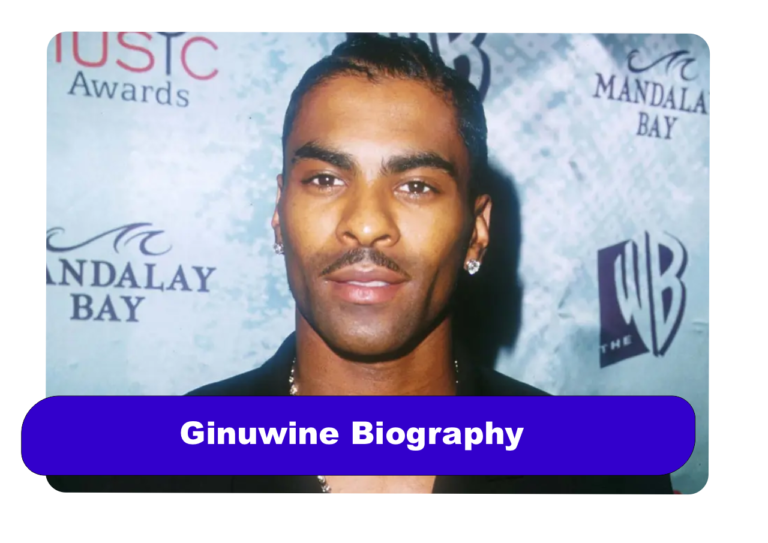
Ginuwine is a 55-year-old legendary R&B singer born Elgin Baylor Lumpkin. Discover his career, hit songs like Pony, net worth, personal life, and lasting legacy.
Ginuwine is one of the defining voices of late 1990s and early 2000s R&B. Born Elgin Baylor Lumpkin, he rose to fame with his debut single “Pony” in 1996 — a track so culturally embedded it still surfaces in films, video games, and viral moments decades later. With a smooth, seductive vocal style and an unmistakable stage presence, he became one of the genre’s top artists, selling an estimated 10 million albums in the United States alone.
What makes Ginuwine’s story compelling is not just the music but the resilience behind it. He built a platinum-selling career while navigating personal tragedy, public financial struggles, and an industry that moved quickly past its own legends. Through it all, he kept performing, kept recording, and kept showing up — earning him a respect in R&B circles that no chart position can fully capture.
Quick Facts About Ginuwine
| Detail | Information |
|---|---|
| Full name | Elgin Baylor Lumpkin |
| Stage name | Ginuwine |
| Date of birth | October 15, 1970 |
| Age (2026) | 55 years old |
| Birthplace | Washington, D.C., USA |
| Profession | R&B singer, songwriter, dancer, actor |
| Net worth (2026) | Approximately $1.5 million |
| Ex-wife | Solé (Tonya M. Johnston), married 2003–2015 |
| Children | Nine children |
| Famous for | “Pony,” “Differences,” “So Anxious,” Ginuwine…The Bachelor |
Early Life and Family Background
Elgin Baylor Lumpkin was born on October 15, 1970, in Washington, D.C. He was named after NBA legend Elgin Baylor, a fellow D.C. native — a nod to greatness that would prove fitting. He grew up alongside siblings Latisha Lumpkin and James Lumpkin III in a household shaped by faith, education, and an appreciation for hard work. His parents, Sandra and James II Lumpkin, raised him in the Maryland suburbs just outside the capital.
Music found Ginuwine early. As a child, he was captivated by Prince and Michael Jackson — particularly Jackson’s legendary moonwalk on the Motown 25th anniversary special. By the time he was 12, he was performing with a local hip-hop group called the Finesse Five at neighborhood parties and bars. He later performed as a Michael Jackson impersonator, honing a performance quality and physicality that would become central to his identity as an artist.
Tragedy arrived just as his career was beginning to peak. His father, James II Lumpkin, died by suicide in 1999. His mother, Sandra Lumpkin, passed from cancer less than a year later. Ginuwine has spoken openly about how deeply those losses affected him, and how close he came to losing himself in grief. He channeled that pain into “Two Reasons I Cry,” a raw and personal track featured on his 2001 album The Life.
Education
Ginuwine attended Forestville High School in Forestville, Maryland, graduating in 1988. He went on to earn an associate’s degree in paralegal studies from Prince George’s Community College in Largo, Maryland — a practical fallback, he has said, in case the music didn’t work out. That groundedness defined his early approach to a career that had no guarantees.
The Making of a Stage Name
The name Ginuwine didn’t come from nowhere. He wanted something with three syllables that reflected authenticity and personality. He initially landed on “genuine,” then shaped it into something more distinctive — pulling from the sounds of his birth name “Elgin” and arriving at the unique spelling that became his brand. It was a small but deliberate act of self-definition that set the tone for everything that followed.
Swing Mob, Timbaland, and the Road to “Pony”
In the early 1990s, Ginuwine joined Swing Mob — a music collective and record label founded by Donald “DeVante Swing” DeGrate of Jodeci, based in Rochester, New York. The collective was a hub of raw talent and creative energy. It was there that he met producer Timothy “Timbaland” Mosley, rapper Missy Elliott, and singer-songwriter Stephen “Static Major” Garrett — collaborators who would reshape R&B history alongside him.
When Swing Mob folded, those relationships didn’t. Ginuwine signed with Epic Records as a solo artist and, with Timbaland producing, released his debut album Ginuwine…The Bachelor in 1996. The lead single, “Pony” — co-written by Static Major and built on Timbaland’s halting, innovative beat — peaked at number six on the Billboard Hot 100 and announced the arrival of something genuinely new in R&B. The album was certified double platinum by the RIAA.
“Pony” has since taken on a life of its own far beyond its original moment. It appeared in the video game Grand Theft Auto IV in 2008, was featured in Channing Tatum’s iconic striptease scene in Magic Mike (2012), and has been referenced across television, social media, and pop culture more times than can be counted. For many listeners, it remains the defining Ginuwine record — though his catalog runs considerably deeper.
Albums, Hits, and Career Milestones
Ginuwine built one of the more consistent album runs of his era. 100% Ginuwine (1999) went double platinum and featured hits including “So Anxious” and “None of Ur Friends Business.” The Life (2001) debuted at number three on the Billboard 200 and spawned “Differences,” his highest-charting single, which peaked at number four on the Billboard Hot 100 and reached number one on the Billboard Hot R&B/Hip-Hop Songs chart. The Senior (2003) followed with top-ten single “In Those Jeans” alongside “Hell Yeah” and “Stingy.”
His fifth album, Back II da Basics (2005), debuted at number 12 on the Billboard 200. In 2007, he co-founded the R&B supergroup TGT alongside Tyrese Gibson and Tank, releasing one studio album with the trio in 2013. He also received a Grammy nomination during his career and was honored with the Urban Music Icon award at the 2021 Black Music Honors — formal recognition of a legacy that fans had long understood.
Acting and Television Work
Ginuwine made the move into acting with appearances in several television shows and films. He appeared in three episodes of the popular series Moesha and had a guest role on Half & Half. He was cast as R&B singer “Romeo” in the film Juwanna Mann (2002) and co-starred in the Gospel Music Channel’s production of the stage play The Ideal Husband in 2011. He also appeared twice as himself on the comedy series Parks and Recreation, during the sixth and seventh seasons, earning a new generation of fans who may not have grown up with “Pony.”
In January 2018, he entered the UK reality show Celebrity Big Brother 21, where he remained for 18 days before being evicted. The appearance introduced him to a broad international audience and kept his name in the cultural conversation.
Personal Life
Ginuwine met rapper Tonya M. Johnston — known professionally as Solé — in 1999, and the two began dating that same year. They married on September 8, 2003, in the Cayman Islands. Together they have two daughters: Story Asaundra Lumpkin, born in 2001, and Dream Sarae Lumpkin, born in 2002. The marriage ended when Solé filed for divorce in November 2014, with the split finalized on July 22, 2015. Ginuwine has since acknowledged on the Drink Champs podcast that his own infidelity was a central cause of the breakdown.
In total, Ginuwine has nine children from various relationships. He has spoken about fatherhood as one of the most grounding forces in his life, particularly during periods of personal and professional difficulty. As of 2026, he is reported to be single.
Net Worth and Financial Challenges
Ginuwine’s net worth is estimated at approximately $1.5 million as of 2026 — a figure that reflects both the real earnings of a multi-platinum career and the financial turbulence that followed. In 2014, it was reported that he owed the IRS over $300,000 and faced additional creditor claims, including a lawsuit from the executive producer of The Bachelor seeking $250,000 in unpaid royalties. His divorce from Solé was also cited as a significant financial setback.
The disparity between his commercial success — over 10 million albums sold in the US — and his current net worth is a reflection of broader industry realities: the erosion of royalty structures, the cost of legal disputes, and the difficulty of maintaining wealth without consistent backend revenue streams. He has continued to earn through touring, live performances, and select acting and brand work, including a spokesperson role for Adult Chocolate Milk, a 40-proof vodka-based beverage.
Legacy and Cultural Impact
Ginuwine’s influence on R&B is difficult to overstate. He was part of the Timbaland-led creative wave that helped define the sound of late-1990s and early-2000s Black music — futuristic production, sensual lyricism, and an unmistakably physical performance style. Songs like “Pony,” “Differences,” and “So Anxious” remain fixtures in R&B playlists, wedding receptions, and throwback radio across the world.
His career arc also speaks to something more personal: the ability to keep going after loss, financial struggle, and the inevitable shifting of industry attention. He received the Urban Music Icon award in 2021 not as a lifetime achievement consolation but as genuine acknowledgment of a body of work that shaped a genre. At 55, he continues to tour and perform, carrying those songs to audiences who have loved them for decades and new listeners discovering them for the first time.
Final Thoughts
Ginuwine’s biography is a story about talent meeting timing — and then holding on long after the timing has shifted. He arrived at exactly the right moment in R&B history, aligned with exactly the right collaborators, and delivered music that was genuinely ahead of its time. “Pony” alone would be enough of a legacy. But “Differences,” “So Anxious,” “In Those Jeans,” and the full arc of his eight solo albums tell a richer, more complex story.
Behind the music is a man who lost both parents within a year, navigated a painful divorce, faced public financial struggles, and kept performing through all of it. That resilience, more than any chart position, is what makes Ginuwine’s story worth telling. He is one of R&B’s genuine originals — and at 55, he’s still in the room.
People Also Ask
What is Ginuwine’s real name?
Ginuwine’s real name is Elgin Baylor Lumpkin. He was named after NBA legend Elgin Baylor, who was also born in Washington, D.C. He adopted the stage name “Ginuwine” in 1996 when he released his debut album, shaping it from a play on the word “genuine” and the sounds of his birth name.
What is Ginuwine’s most famous song?
“Pony,” released in 1996 from his debut album Ginuwine…The Bachelor, is his most iconic song. It peaked at number six on the Billboard Hot 100 and has remained a cultural touchstone, appearing in Grand Theft Auto IV, Magic Mike, and countless other media.
How many children does Ginuwine have?
Ginuwine has nine children in total from various relationships. Two of them — daughters Story and Dream — were born during his relationship and marriage to rapper Solé.
What happened with Ginuwine and Solé?
Ginuwine and rapper Solé married in September 2003 and divorced in July 2015. Solé filed for divorce in November 2014. Ginuwine has publicly acknowledged that his infidelity was the primary reason for the breakdown of the marriage.
Is Ginuwine still making music?
Yes. Ginuwine remains active in the entertainment industry, continuing to tour, perform live, and make occasional media appearances. He received the Urban Music Icon award at the 2021 Black Music Honors, and his classic catalog continues to attract new listeners.